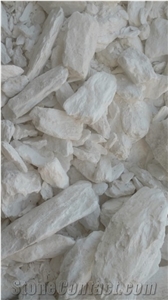
Soapstone is a special rare natural stone. On Stonecontact.com, you can find large-size raw blocks of Soapstone, for cutting into slabs to use as countertops, fireplaces, custom size cut tiles for stoves, and rock-shaped products for engraving ornaments, and handmade souvenirs. You can find what you are looking for at the most affordable prices by contacting quarry owners from countries such as the United States, India, Finlandia, Brazil, Italy, Pakistan.
Ask a Question
Could not find the answer you need? Ask about White Soapstone Boulders.
In which country is Soapstone mostly mined?View answer⌄
Asked by Visitor
Soapstone, also known as steatite, can be found all over the world. Much of the soapstone seen these days comes from Brazil, China or India. Significant deposits also exist in Finland, Australia and Canada, as well as in England, Austria, France, Italy, Switzerland, Germany and the United States.
Soapstone is naturally a softer stone, since it is made up mostly by Talc, among other minerals. Some of these really hard Soapstones out there, have no Talc in them and in petrological terms cannot be called a soapstone, they are serpentinites.
Is soapstone as hard as granite or basalt?View answer⌄
Asked by Visitor
While not as hard as granite, this material is more flexible. That means it is less breakable, so it won't crack unexpectedly from stress or weight. In addition, soapstone is very non-porous, another important strength that sets it apart from granite, basalt, sandstone and slate.
Scratch the surface of the stone with your fingernail. Soapstone is very soft; it is assigned a rating of 2 on the Mohs Hardness Scale, which makes it possible to leave marks on the surface of the stone with your fingernail.
Rub the stone. There should be a waxy, soapy feel to the surface of the stone, whether it is polished or not.
Test the stone's temperature. Soapstone retains more heat than any other material. Compared to other stove building materials, soapstone has the capacity to store twice as much heat as steel.
Soapstone is stain resistant, but will naturally darken with use. Since soapstone is inert and non-porous, it does not need to be sealed, although it is sometimes treated with mineral oil to achieve a dark, even appearance.
Soapstone is of course non-flammable and has a super high melting point, and talc is not chemically reactive to the caustic gases emitted by wood burning, so it won't stain or discolor in the same way as marble or limestone.


 Pakistan

 United States